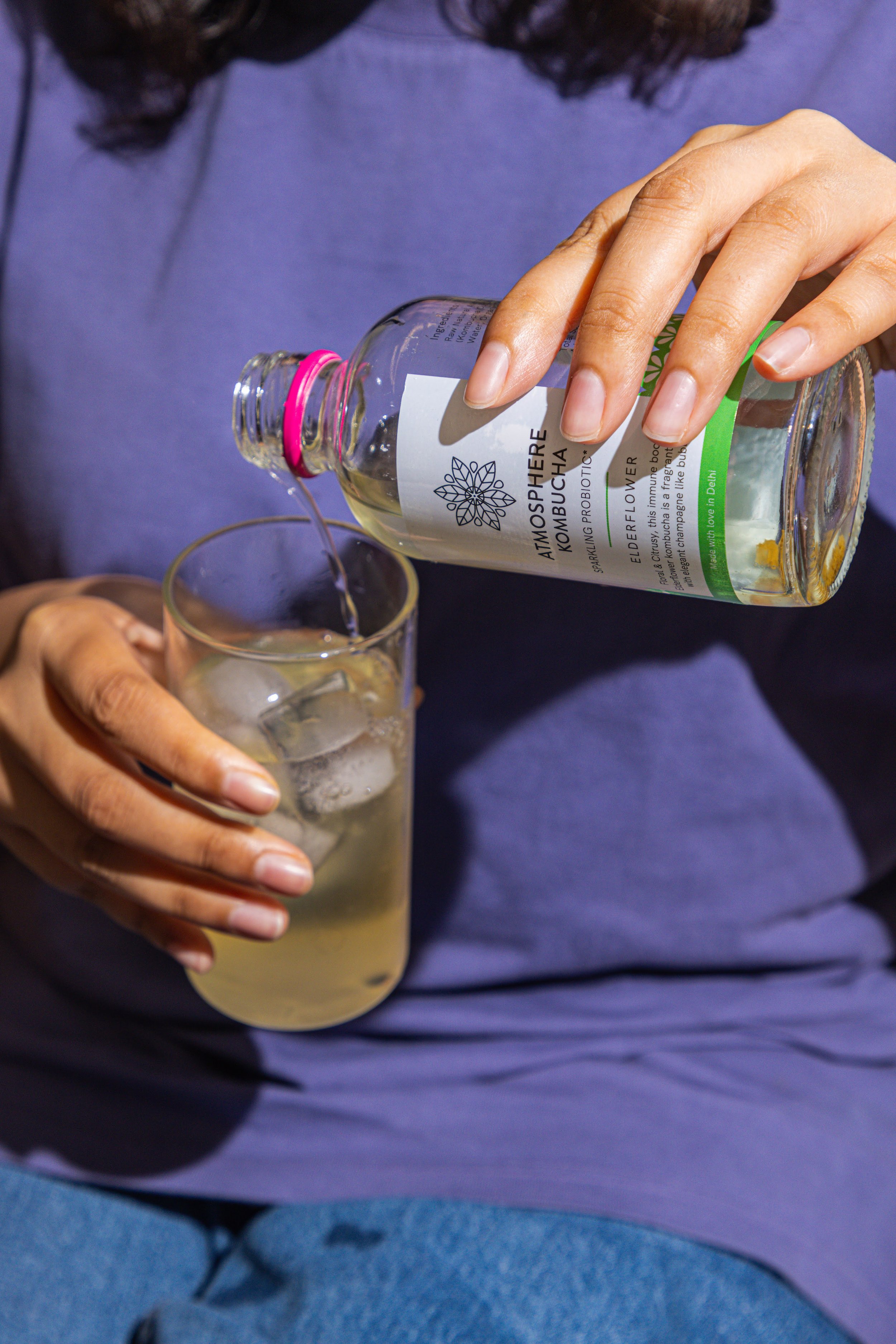
Why We Still Make Kombucha the Hard Way
When we started Atmosphere almost ten years ago, we weren't trying to build a beverage company.
We were trying to help people feel better.
My sister, Ariella, was working as a nutritionist. Every day she met people struggling with bloating, IBS, gas, acidity, and digestive issues that affected their quality of life. Again and again she saw that lasting change didn't come from quick fixes—it came from building sustainable habits.
At the same time, I was on my own gut health journey.
Kombucha had become part of my daily routine, and I experienced first-hand what introducing fermented foods into my diet could do. It wasn't a miracle cure, but it made a meaningful difference.
We were already making kombucha for ourselves so we started sharing it with others.
Back then, almost nobody knew what kombucha was. We spent years explaining fermentation, introducing people to the idea of live cultures, convincing retailers to refrigerate the product, and encouraging people to take a chance on something that looked unfamiliar.
It was never the easiest business to build.
Real kombucha takes time. It requires fermentation, careful brewing, refrigeration, and a cold supply chain from our factory to your fridge. Those things make it more expensive to produce and much more expensive to distribute.
But we believed it was worth it.
Today, the category has changed dramatically.
There are more brands than ever before selling products labelled as kombucha. In many ways, that's something to celebrate. More awareness means more people are discovering fermented beverages, and we've always wanted kombucha to become accessible to more Indians.
But it has also created a new challenge.
Many products on the market today are made very differently from traditionally fermented kombucha. They're designed to be shelf stable, cheaper to produce, and easier to distribute. For consumers, the differences aren't always obvious.
The problem isn't simply that they're different.
The problem is that many people buy these products expecting the same experience they would get from a traditionally fermented kombucha.
When they don't notice any difference in how they feel, they often don't question the product.
They question kombucha as a concept.
As founders, that breaks our hearts a little.
Because we didn't start Atmosphere to make money scaling beverages.
We started it because we believed fermented foods could genuinely improve people's lives.
There have been countless conversations about whether we should make our kombucha shelf stable, reduce fermentation time, cut ingredient costs, or make changes that would make the business easier. Our retail partners are constantly pressuring us to consider this.
Every one of those decisions would lower our costs, simplify distribution and improve our margins.
But every time we come back to the same question:
Would this still be the product we set out to make?
For us, the answer has always been no.
That doesn't mean our way is the only way.
Innovation is important. Accessibility is important. Affordability is important.
But so is honesty.
If a customer picks up one of our bottles believing they're buying traditionally fermented kombucha made with real ingredients and live cultures, we want that to be exactly what they're getting.
Even when it's harder, expensive and easy to compromise.
Because trust takes years to build and only a moment to lose.
As a food company, we believe our responsibility is bigger than selling another bottle.
It's protecting the trust people place in what they eat and drink.
And if we can do that while helping even one person experience fewer digestive issues, a little less bloating, or a healthier relationship with food...
Then making kombucha the hard way will always be worth it.