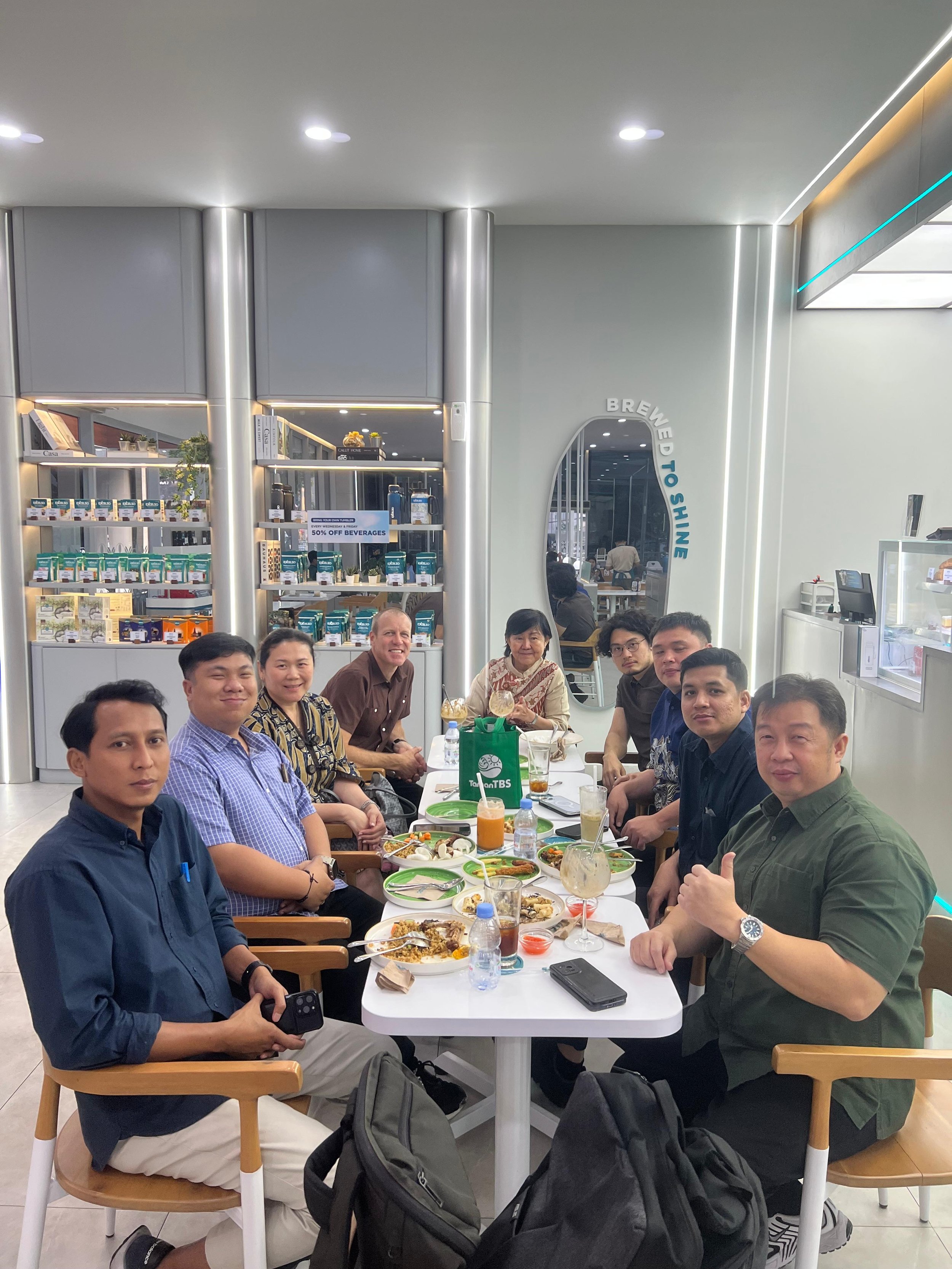
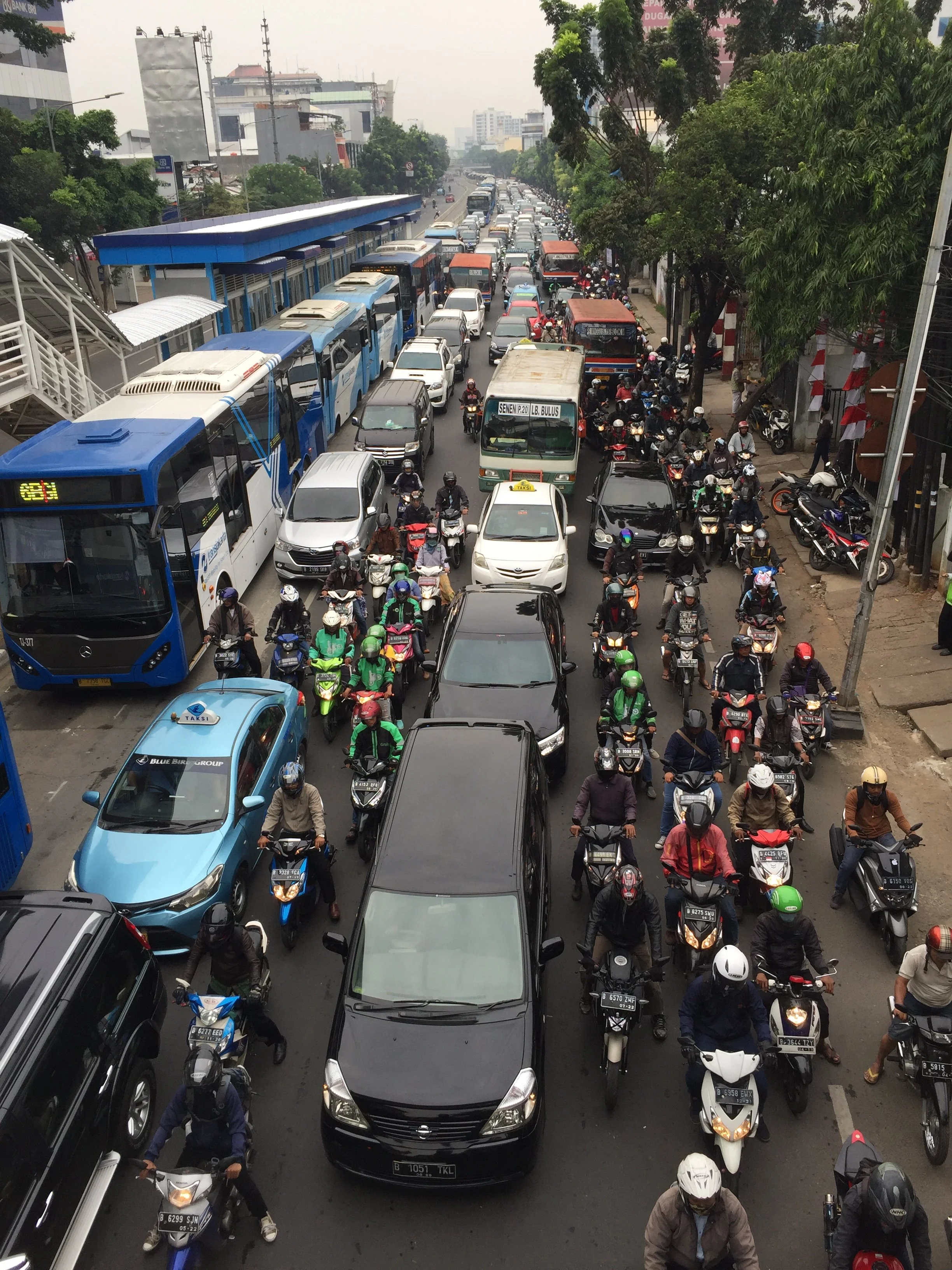
Jakarta is Indonesia’s commercial and cultural center—and its scale is difficult to appreciate until you experience it firsthand. The United Nations estimates that its continuously populated urban area was home to nearly 42 million people in 2025, making it the world’s most populous city under the UN’s standardized definition (link). Jakarta also ranks 7th globally in INRIX’s congestion rankings (link) – traffic in Jakarta is intense!
I experienced that scale—and the traffic—during three days of meetings in late August while traveling from the United States to Papua. Despite the hours spent moving across the city, the visit created valuable opportunities to strengthen PT NSP’s supplier relationships, advance planning for a hospital project, and explore financing options for future solar customers.
Day 1: Strengthening supplier relationships
My first visit was with Supreme Cable, Indonesia’s leading electrical-cable manufacturer whose Papua sales team I mentor through a small consulting engagement. I toured the Kabel Indo factory and later met with CEO Ibu Ely and members of the company’s executive sales team.
Our discussion focused on the challenges of serving Papua, where long distances, limited infrastructure, and high logistics costs make reliable product supply especially important. We discussed how Supreme Cable could strengthen its sales and distribution presence in eastern Indonesia and better support projects in remote communities.
PT NSP expects Supreme Cable to be an important supplier because its products meet the technical standards required for our projects, and it is known for high quality.
Later that day, I met with Nino, StB Giga’s applications engineer in Indonesia. We reviewed the company’s battery products and discussed several potential applications and customer opportunities for PT NSP.
Day 2: Hospital planning and company transition
On the second day, I joined representatives of a Papua based mission org and Siloam Hospitals to continue planning for a potential hospital project in Papua. The meeting brought together Siloam’s leadership, legal and commercial teams, and the mission org’s legal adviser.
The discussion helped clarify several of the organizational and legal questions that must be addressed before the project can advance. There is still significant work ahead, but bringing the relevant decision-makers together was an important step toward defining a viable path forward.
I also met with the shareholder who had maintained the dormant company that is now being repurposed as PT NSP. We worked through the remaining items required to complete that transition and prepare the company for active operations.
Day 3: Exploring customer financing
The final day included one of the trip’s most promising meetings: a conversation with the chief operating officer of Bank Nobu.
Upfront cost is one of the largest barriers preventing customers from adopting solar power. We therefore discussed existing and potential Bank Nobu financing products that could make PT NSP’s solar PV systems accessible through installment payments. We also explored a possible collaboration involving the bank’s mini-ATM network, which I hope to discuss in a future post.
No financing arrangement has been finalized, but the meeting opened a promising line of discussion around one of PT NSP’s most important commercial challenges.
Turning meetings into progress
Jakarta’s traffic and seemingly endless concrete made the three days demanding, but the trip produced progress in three areas: supplier coordination, institutional partnerships, and customer financing.
The next step is to turn those conversations into concrete actions—strengthening the Papua supply chain, advancing the hospital project’s planning, completing PT NSP’s corporate transition, and evaluating a workable solar-financing partnership.