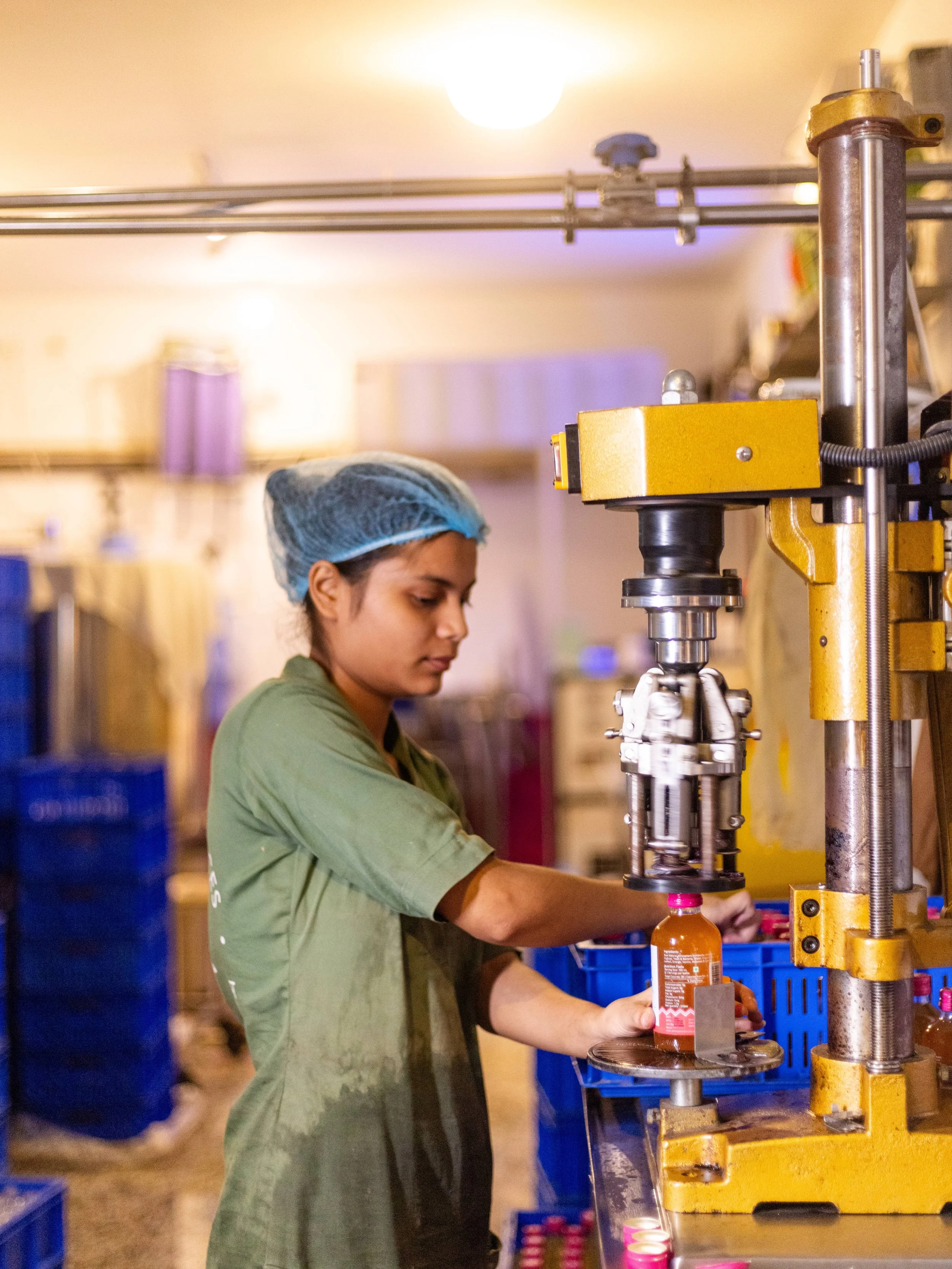
Global Events and a Small Kombucha Company
2025 was a year of incredible growth for Atmosphere. We finished the year excited for what was ahead. We had plans to move into a new factory, increase production and continue expanding. It felt like everything was lining up.
Then, almost overnight, things changed.
About a month before our factory move, we placed our usual order for glass bottles, only to find out they were out of stock. At first we thought it was a temporary delay. Instead, we found ourselves caught up in a much larger global supply chain crisis.
The conflict in Iran created disruptions to LPG supplies that affected industries across India, including glass manufacturing. Without sufficient fuel, production slowed dramatically and suddenly bottles—the one thing we simply can't operate without—became incredibly difficult to source.
For two weeks we were unable to produce a single bottle of kombucha.
Our products gradually disappeared from shelves around the country as existing inventory sold through. Unfortunately, this happened during March and spilled into April, two of the most important months of the year for our business.
As a cold drink company, spring is when our sales really begin to take off after North India's cooler winter. Those months help build momentum for the rest of the year and often contribute significantly towards our annual profitability. By June, school holidays, family travel and eventually the monsoon naturally slow beverage sales. Missing production during the spring wasn't just disappointing—it had a huge financial impact.
And the bottles were only the beginning.
As the weeks went on, supply chain disruptions spread into almost every part of our business. Raw materials became more difficult to source. Packaging costs increased. Even ingredients like the nuts we use in some of our non-beverage products became more expensive. One disruption created another, and another after that.
It's easy to think global events only affect airlines, oil companies or international trade. Running a small food business has taught us otherwise. A conflict thousands of kilometres away can eventually determine whether a small kombucha company in another part of the world has bottles to fill.
One thing we were incredibly fortunate about was our soda range. Before the aluminium can supply tightened, we had already built up inventory of soda cans. It wasn't part of some master plan—we were simply lucky with our timing. That stock allowed us to continue selling our sodas while many other inputs became increasingly difficult to source. Sometimes preparation is strategic, and sometimes it's just random.
One of the realities of being a smaller company is that we don't have the purchasing power of multinational beverage brands. Large companies can often hold months of inventory or have multiple suppliers ready to step in. Smaller manufacturers don't always have that luxury. When shortages happen, every delayed delivery matters.
The hardest part wasn't simply running out of bottles. It was knowing our team still needed salaries, rent still had to be covered, suppliers needed to be paid, and customers who couldn't find our products would inevitably buy something else. Business doesn't pause just because production does.
The experience has also changed how we think about resilience. Over the past few years, we have focused on becoming leaner and more efficient. This year reminded us that leanness has a cost. Holding a little more inventory, diversifying suppliers and planning further ahead may tie up more cash, but it also provides insurance against such events.
Thankfully, once bottle supplies resumed, we were able to get production back on track. May turned out to be one of the strongest months in Atmosphere's history, giving us confidence that demand for our products remains strong despite the challenges.
Running a food and beverage company has shown us just how interconnected the world really is. Wars, fuel supplies, weather, harvests and shipping routes eventually find their way into supermarket shelves and kitchen fridges. Most consumers never have to think about those connections. As manufacturers, we experience them every day.
2026 certainly hasn't gone the way we imagined when the year began. But if there's one thing this experience has reinforced, it's that building a business isn't just about growing during the easy seasons—it's about learning how to adapt when the unexpected happens.